Wed. 7 pm, Coleman 2750
http://ux1.eiu.edu/~nekey/syllabi/5250.htm
Syllabus as pdf (brief version)
"When great revolutions are successful their causes cease to exist.... The very fact of their success has made them incomprehensible.... The most perilous moment for a bad government is one when it seeks to mend its ways." Alexis de Tocqueville, Old Regime and the French Revolution (1856)
"[N]ationality, nationalism, nationhood.... Surely no other part of the legacy of the French Revolution has had such historical resonance. I find it odd that people should have treated as a joke the remark of Chou En-Lai, who, when someone asked him about the significance of the French Revolution is said to have replied, 'It is too soon to tell.'" John Roberts, "Goodbye to all that?," History Today (Aug. 1991)
"My brother's back at home with his Beatles and his Stones. / We never got it off on that revolution stuff. / What a drag, too many snags." David Bowie, "All The Young Dudes" (1972)
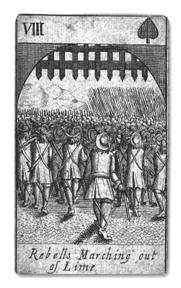
week 1. Introduction: Beyond Modernization (and Westernization)?, 24 Aug.
- Questions
- Why early modern? What is early? What is modern? (Does the early modern revolution exist?)
- Why Europe? Compare and contrast westernization with modernization? (Is there a peculiar European or Western revolution?)
- Why Revolution? Compare and contrast revolution and riot/rebellion/evolution? (Are historians comparative?)
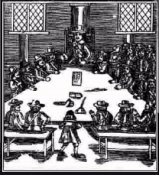
week 2. Theory: Searching for definition, 31 Aug.
- F. Engels, "The Bourgeois Revolution" (introduction to Socialism: Utopian and Scientific, 1892), reprinted in Lawrence Stone, Social Change and Revolution in England, 1540-1640 (New York, 1965), 3-6. d2l
- Karl Marx and Friedrich Engels, The Communist Manfesto (1848), in The Marx-Engels Reader, 2nd ed., ed. Robert C. Tucker (New York 1978), 469-83 & 499-500 (parts I, II, and IV). d2l
- Parker, "Introduction," Revolutions and the Revolutionary Tradition (1-14)
- Keith Baker and Dan Edelstein, eds., "Introduction," Scripting Revolution: A Historical Approach to the Comparative Study of Revolutions (Stanford, 2015), 1-21. d2l
- Extras
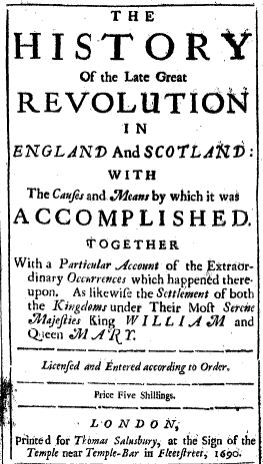
week. 3. Theory: Riot, Rebellion, and the Meaning of Politics, 7 Sept. (OD)
- Barry Reay, "Riots and the Law," Popular Cultures in England, 1550-1750 (London: Pearson, 1998), ch. 6
- Andy Wood, "Interpreting Popular Politics in Early Modern England," Riot and Popular Politics in Early Modern England (Basingstoke: Palgrave, 2002), intro.
- Rebellion Assignment (group presentations): German Peasants' War or Revolt (1524-1525); Munster Rebellion (1534-1535); Prayer Book Rebellion (1549); Northern Rebellion (1569); or St. Bartholomew's Day massacre (1572)
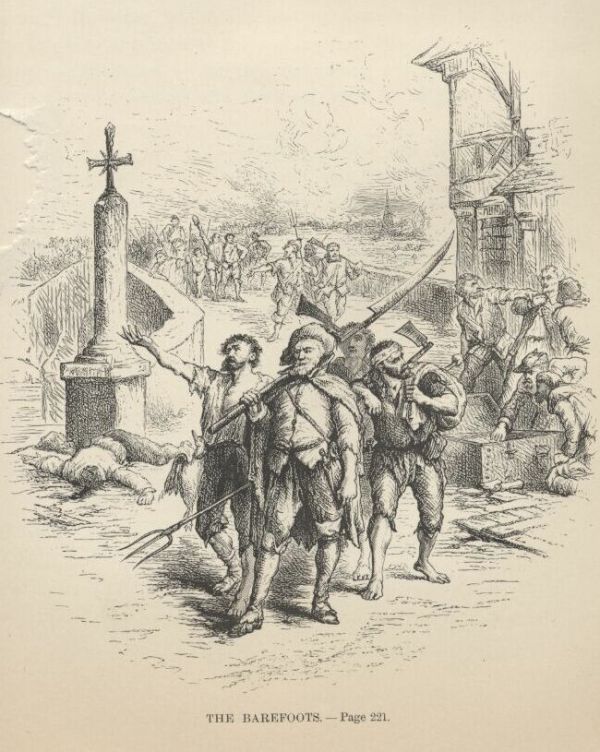
week 4. The Seventeenth-Century World: Food & Family, 14 Sept. (OD)
- Parker, Global Crisis, Prologue, Introduction, Part I, "The Placenta of the Crisis" (xv-xxix, 1-109)
- ESTC --> EEBO Assignment
- Quote Response (1 of 4) Response essay prompt
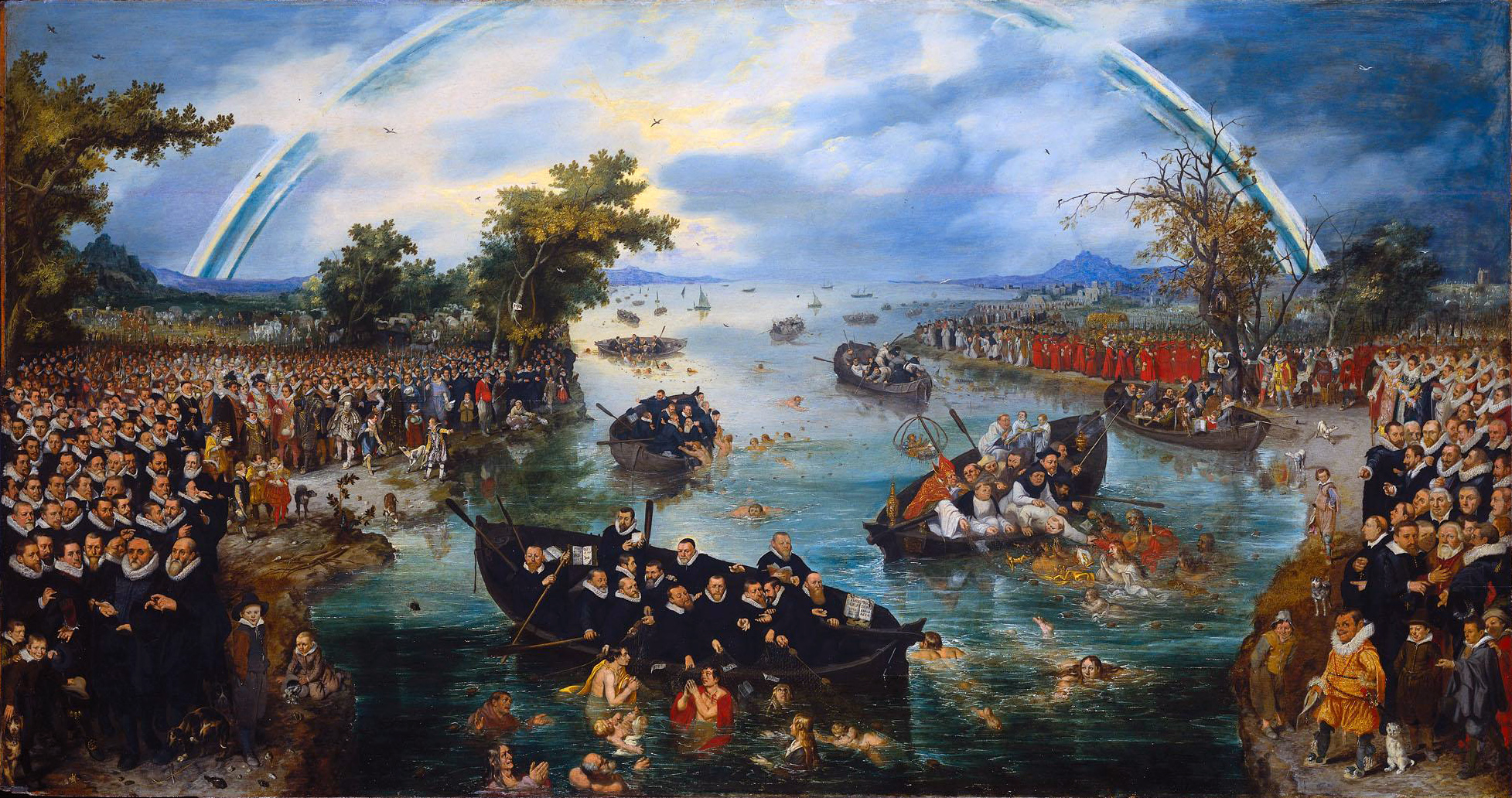
Adriaen Pietersz. van de Venne, Fishing for Souls (1614)
week 5. The Century of Revolutions and the British Isles: Do Models Need Apply? (Structural or Contingent?), 21 Sept.
- Parker, Global Crisis, chs. 11-12 (324-358, 359-95)
- Kishlansky, Charles I (2014), 54-105, 110-111
- Adamson, "High Roads and Blind Alleys -- the English Civil War and its Historiography," The English Civil War: Rebellion and Revolution in the Kingdoms of Charles I (2009), 1-35, 225-240
- Quote Response (1 of 4) Response essay prompt
- Office Meeting (to plan research focus)

Nicolas Poussin, The Rape of the Sabine Women (c. 1637-38)
week 6. Regicide and Revolution, Online Class Only (OD)
- Kesselring, Trial of Charles I, part I
- Hughes, "The English Revolution of 1649," Revolutions and the Revolutionary Tradition (34-55)
- Quote Response (1 of 4) Response essay prompt
week 7. Who Did It?: English Revolution(s) in Comparative Context, 5 Oct.
- Parker, Global Crisis, Part IV, "Confronting the Crisis," chs. 17-18 (505-585)
- Kesselring, Trial of Charles I, part II
- Primary source (EEBO--TCP) or Primary source assignment one EEBO & Revolution (Read 2-3 newsbooks for one week in assigned year, 1641-1653, collected by George Thomason, cite according to Chicago Manual of Style, write 3-4 sentences on how specific events/stories might be evaluated as revolutionary) assignment due
week 8. Free Radicals?, 12 Oct. (OD)
- Hill, World Turned Upside Down, intro. & chs. 1-7 (12-150)
- Newton Key and Robert Bucholz, eds., "Civil War and Revolution," in Sources and Debates in English History, 1485-1714, 2nd ed. (Oxford, 2009), 170-207. d2l
- Quote response (1 of 4)
- Additional
- R.C. Richardson, "The Canon: The World Turned Upside Down by Christopher Hill" (24 June 2010)
- WTUD (excerpts)
- Christopher Hill, obituary (27 Feb 2003)
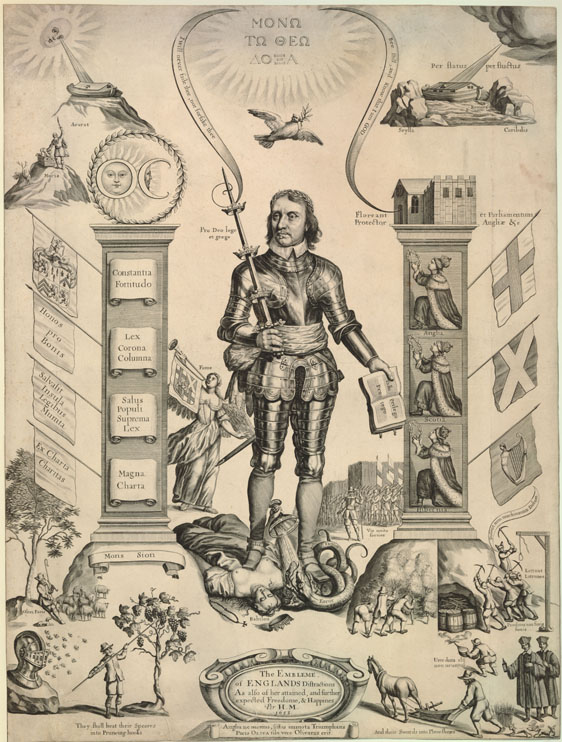
The Embleme of Englands distractions as also of her attained, and further expected Freedome, & Happines (1658)
week 9. Are Revolutions Popular?; Are They Radical?, 19 Oct. (OD) DRAFT
- Hill, World Turned Upside Down, chs. 8-10 (151-258), 15-18 (306-386)
- Alastair MacLachlan, The Rise and Fall of Revolutionary England: An Essay on the Fabrication of Seventeenth-Century History (New York, 1996), 181-193. d2l
- Kesselring, Trial of Charles, part III
- Quote response (1 of 4)
- Winstanley (1975, see D2L)
- Riot, Rebellion & Revolution (youtube playlist)
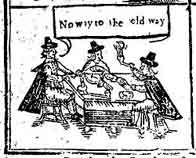
week 10. Glorious Revolution as an archetypal revolution, 26 Oct. (OD)
- Speck, "1688: A political revolution," Revolutions and the Revolutionary Tradition (53-67)
- Bucholz and Key, Early Modern England, "Restoration and Revolution, 1660-1689" (esp. 294-314) d2l
- Pincus, 1688, Introduction, chs. 1-2
- Primary source assignment three due
- Quote Response (1 of 4) Response essay prompt
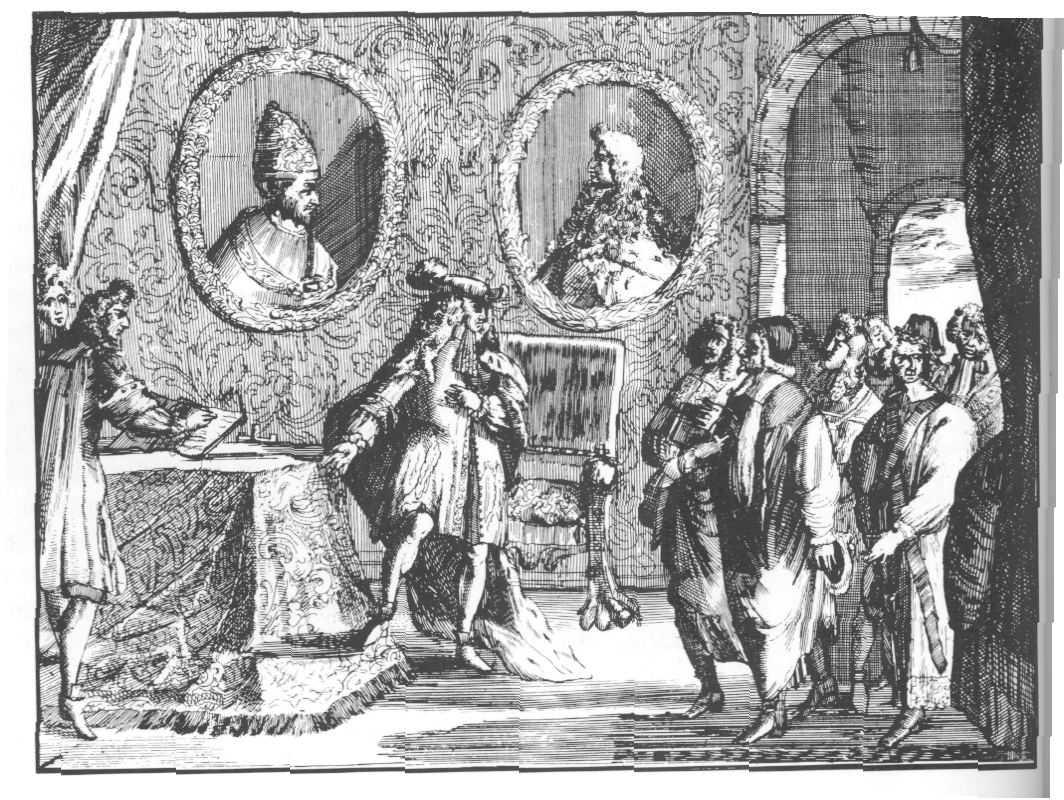
James II (supposedly refusing a free parliament, but these look like the bishops)
week 11. Glorious Revolution: a constitutionalist, an idealist, a materialist, or a revisionist explanation?, 2 Nov.
- Pincus, 1688, part III (chs. 8-10)
- Lionel K.J. Glassey, "In Search of the Mot Juste: Characterizations of the Revolution of 1688-9," in The Final Crisis of the Stuart Monarchy: The Revolutions of 1688-91 in Their British, Atlantic and European Contexts, ed. Tim Harris and Stephen Taylor (Woodbridge, Suffolk: Boydell Press, 2013), 1-32 d2l
- Steve Pincus on the English Revolution of 1688
- Quote Response (1 of 4) Response essay prompt (draft)
- (revolutionary rubric, nos. 1-3 [revised], 4 & 7)
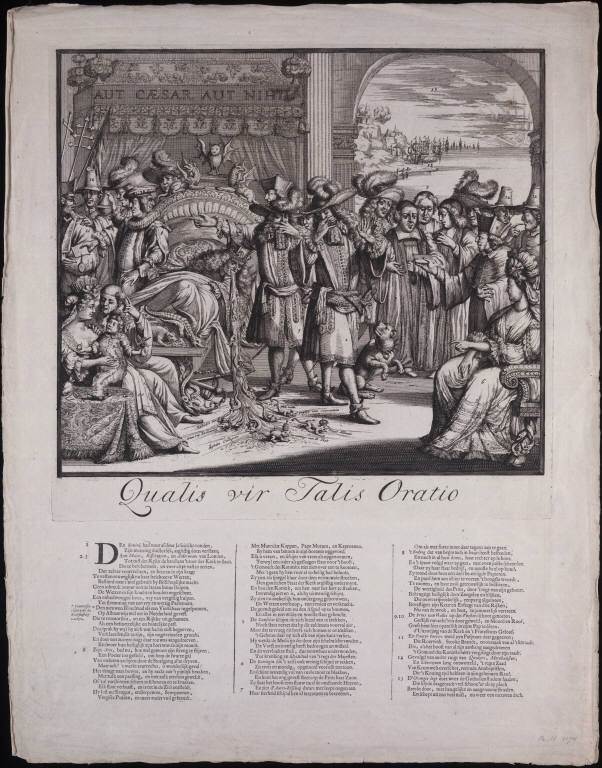
Romeyn de Hooghe, 1688 (Dutch political cartoon on warming pan, theory)
week 12., Revolution and Modernization?: The Case of 1688, 9 Nov. Possibly Online Class Only
- Pincus, 1688, part V (chs. 14-15)
- Scott Sowerby, "Pantomime History (review essay)," Parliamentary History 30, no. 2 (June 2011): 236-58 D2L
- Research introductory paragraph, bibliography, and outline due
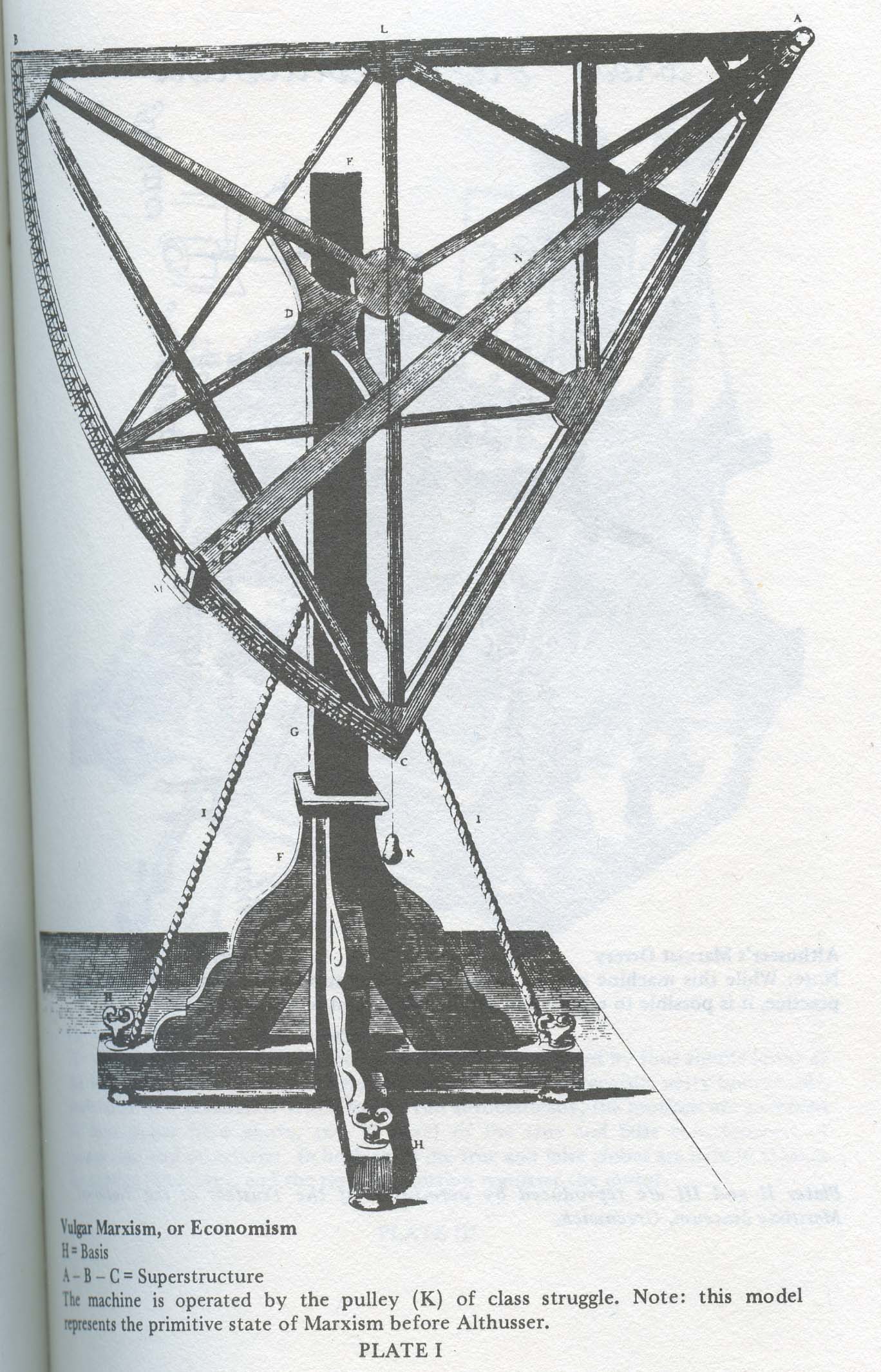
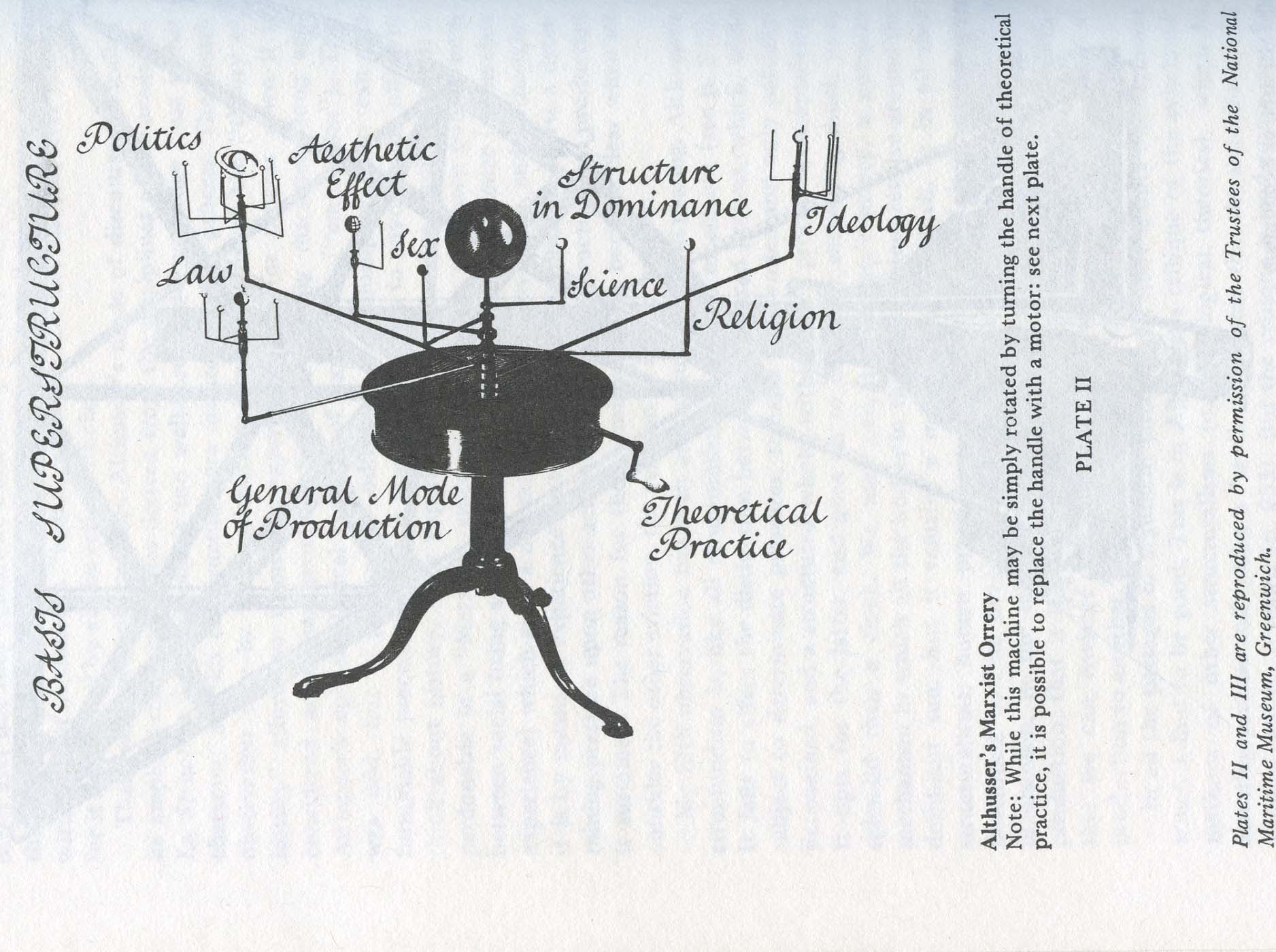
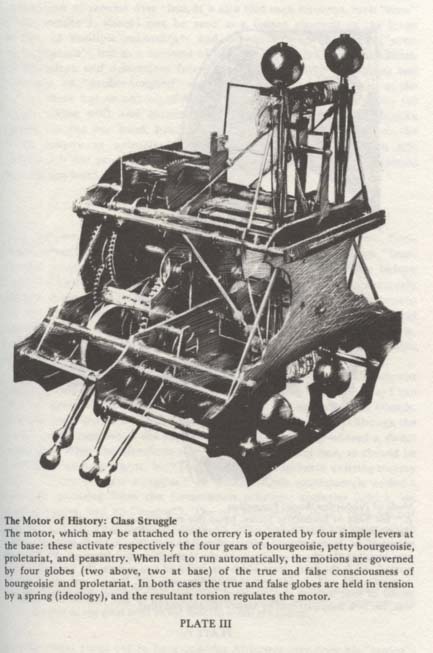
week 13. So was there a 17th Century Crisis?; A 17th Century English Revolution?; Really?, 16 Nov.
- Michael J. Braddick and David L. Smith, eds., "Introduction: John Morrill and the experience of revolution," in The Experience of Revolution in Stuart Britain and Ireland (Cambridge: Cambridge University Press, 2011), 1-10. d2l
- Readings TBA based on your chosen revolution
- Research rubric and two paragraphs due
- Critique of colleague's rubric and two paragraphs due to colleague and to professor by Thursday, 1 Dec., noon
- Critique of colleague's rubric and two paragraphs due to colleague and to professor by Thursday, 1 Dec., noon
- Quote Response (1 of 4) Response essay prompt (draft)
week 14-15. Final reports from the front, and Conclusions, 30 Nov. & 7 Dec.
- 10-Minute Reports (with five-minute critique from respondent/prof)
- Research paper due
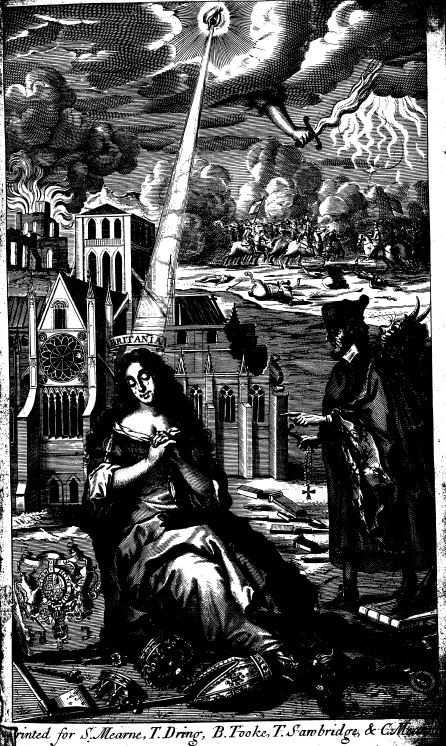
John Nalson, An impartial collection of the great affairs of state (1682), frontispiece
Assigned Books (TRS)
- Hill, Christopher. The World Turned Upside Down: Radical Ideas During the English Revolution. London: Penguin Books, 1972, 1984. [TRS 11.242]
- Krista Kesserling, ed., Trial of Charles I (2016) [TRS 11.472]
- Parker, David, ed. Revolutions and the revolutionary tradition in the West, 1560-1991. London: Routledge, 2000.[TRS 13.380]
- Parker, Geoffrey. Global Crisis: War, Climate Change and Catastrophe in the Seventeenth Century. New Haven: Yale University Press, 2014. [TRS 13.326]
- Pincus, Steven, 1688: The First Modern Revolution. New Haven: Yale University Press, 2009. [TRS 12.591]