EIU His 5000, Fall 2009, Newton Key
Th 19:00-21:15, Coleman 3752
http://ux1.eiu.edu/~nekey/syllabi/historiography.htm
Syllabus as pdf (brief version)

Historiography

week 1.

  • History Stories, 27 Aug.
    • Questions
      • How would you characterize the history of history?
        • What periods/changes would you insert?
      • What are the main approaches/types of history today?
    • Supplementary Materials
old books
  • Man has been a hunter for thousands of years….
  • The hunter would have been the first “to tell a story” because he alone was able to read, in the silent, nearly imperceptible tracks left by his prey, a coherent sequence of events….
  • What may be the oldest act in the intellectual history of the human race [is] the hunter squatting on the ground, studying the tracks of his quarry.
  • Carlo Ginzburg, “Clues: Roots of an Evidential Paradigm,” in Clues, Myths and the Historical Method (Baltimore: Johns Hopkins, 1980), 102-3, 105.

week 2.

  • Arts and Sciences, 3 Sept.
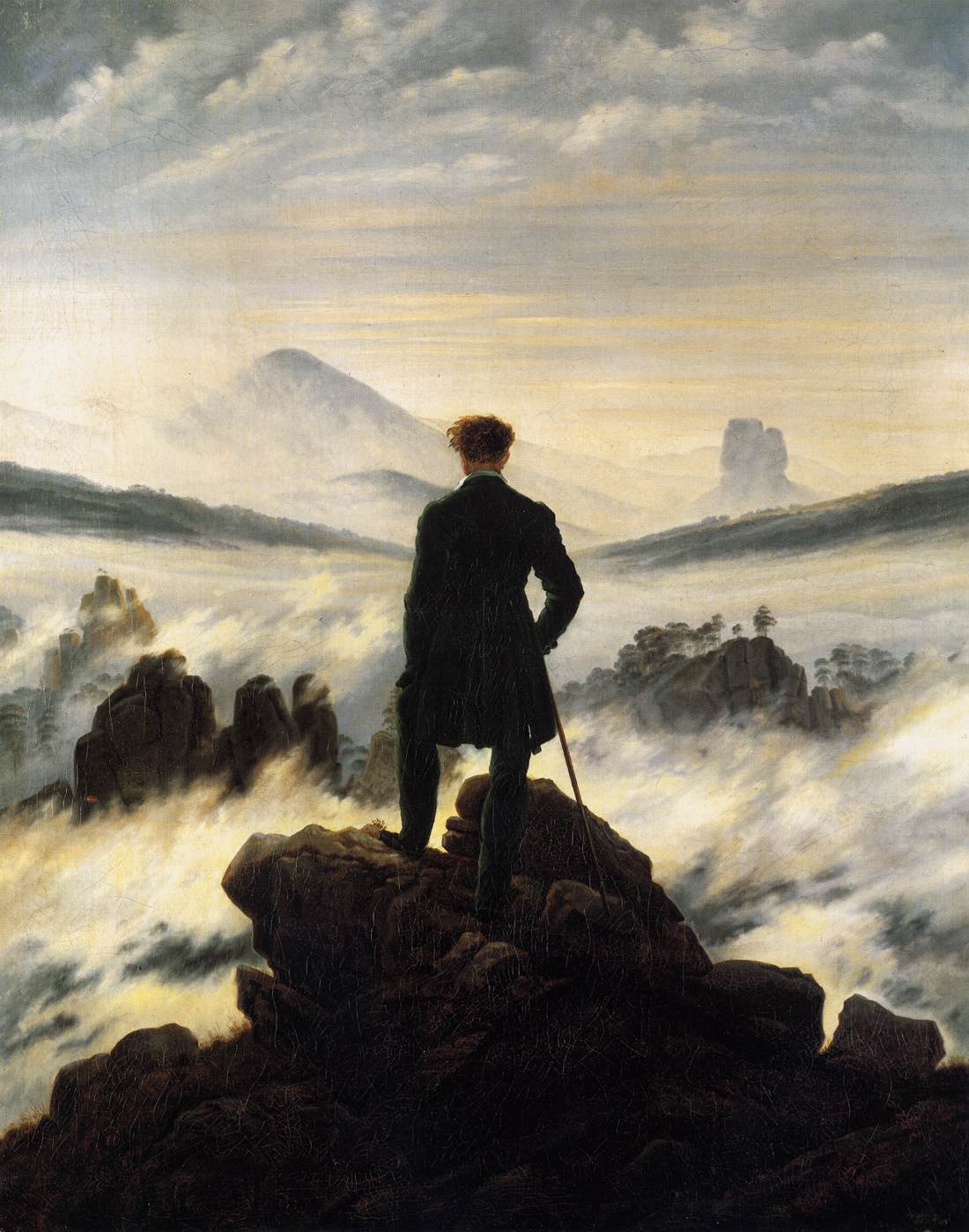
Caspar David Friedrich, Wanderer above the Sea of Fog (1818)

week 3.

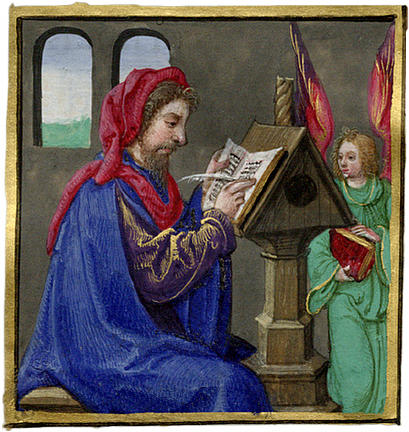
scribe

week 4.

Frederick Jackson's History Semianr, 1893-94

week 5.

  • Marx Class [Dr. Anita Shelton], 24 Sept.
    • Readings
      • Erich Fromm, Marx’s Concept of Man (New York: Frederick Ungar, 1961, 1966), preface and chs. 1-8 (pp. 1-83) AS HANDOUT
      • Georg G. Iggers, “Marxism and Modern Social History,” New Directions in European Historiography, rev. ed. (Middletown, CT: Wesleyan University Press, 1984), 123-74. AS OnR
      • Karl Marx, “Economic and Philosophic Manuscripts,” in Marx’s Concept of Man, trans. T.B. Bottomore (New York: Frederick Ungar, 1961, 1966), 93-109. AS OnR
      • E.J. Hobsbawm, “Marx and History”, in On History (London, 1997), reprinted in Historians on History, ed. John Tosh (Harlow: Pearson, 2000), 91-8. AS/NK OnR
      • E.P. Thompson, “Preface,” The Making of the English Working Class (New York: Vintage, 1963, 1966), 9-14. NK OnR
    • Supplementary Materials

Karl Marx, 1839

E. P. Thompson

week 6.

  • Annales/Macrohistory vs. Microhistory, 1 Oct.
    • Readings
      • Annales
        • Lynn Hunt, “French History in the Last Twenty Years: The Rise and Fall of the Annales Paradigm,” Journal of Contemporary History 21, 2 (1986): 209-24. ElJ
        • Peter Burke, The French Historical Revolution: The Annales School 1929-89 (Stanford: Stanford University Press, 1990), 6-11, 32-64 (esp. 43-64), and glossary (112-6). OnR
      • Microhistory
        • Carlo Ginzburg, “Microhistory: Two or Three Things That I Know about It,” Critical Inquiry 20, 1 (1993): 10-35. ElJ
        • Brad Gregory, “Is Small Beautiful? Microhistory and the history of everyday life,” H & T 38, 1 (1999): 100-10. ElJ
        • Matti Peltonen, “Clues, Margins, and Monads: The Micro-Macro Link in Historical Research,” H & T 40, 3 (2001): 347-59. ElJ
      • Evans, In Defence, ch. 7
      • Anthony Grafton, “History’s postmodern fates,” Dædalus (Spring 2006): 54-69. ElJ
    • Supplementary Materials

March Bloch

Carlo Ginzburg

week 7.

  • The Linguistic Turn: History and Postmodernism [Dr. Mark Hubbard], 8 Oct.
    • Readings
      • Bryan Palmer, "Critical Theory, Historical Materialism, and the Ostensible end of Marxism," The Postmodern History Reader, ed. Keith Jenkins (London: Routledge, 1997), 103-13. MH OnR
      • Roland Barthes, "The Discourse of History," The Postmodern History Reader, 120-3. MH OnR
      • Hans Kellner, "Language and Historical Representation," The Postmodern History Reader, 127-38. MH OnR
      • Gertrude Himmelfarb, "Telling It as You Like It: Postmodernist history and the flight from fact," The Postmodern History Reader, 158-74. MH OnR
      • Lawrence Stone, “History and Postmodernism,” The Postmodern History Reader, 239-43 [includes introduction to the following letters]. MH OnR
      • Patrick Joyce and Catriona Kelly, “History and Post-Modernism,” Letters, P & P 133 (1991): 204-13. MH ElJ
      • Lawrence Stone and Gabrielle M. Spiegel, “History and Post-Modernism,” Letters, P & P 135 (1992): 189-208. MH ElJ
      • Keith Thomas, “New ways revisited: How history’s borders have expanded in the last forty years,” TLS (13 Oct. 2006): 3-4. NK OnR
    • Supplementary Materials
Past & Present (founding editors)
Lawrence Stone
Patrick Joyce


week 8.

  • Atlantic vs. National vs. Global [Dr. Charles Foy], 15 Oct.
    • Readings
      • Bernard Bailyn, "The Idea of Atlantic History," Itinerario 20 (1996): 19-44. CF OnR
      • Alan L. Karras, "The Atlantic World as a Unit of Study," in Atlantic American Societies, ed. Karras and McNeill (London: Routledge, 1992): 1-15. CF OnR
      • J .R. McNeill, "The End of the Old Atlantic World: America, Africa, Europe, 1770-1888," in Atlantic American Societies, ed. Karras and McNeill (London: Routledge, 1992), 245-68. CF OnR
      • Jack P. Greene, "Beyond Power: Paradigm Subversion and Reformulation and the Re-Creation of the Early Modern Atlantic World," in Interpreting Early America, ed. Greene (1996), Part One, Chapter Three. CF OnR
      • Peter Linebaugh and Marcus Rediker, The Many-Headed Hydra. Sailors, Slaves, Commoners, and the Hidden History of the Revolutionary Atlantic (Boston: Beacon Press, 2000), 174-210. CF OnR
      • Philip D. Morgan, "British Encounters with Africans and Afro-Americans, 1500 to 1800," in Strangers within the Realm: Cultural Margins of the First British Empire, ed. Bernard Bailyn and Morgan (Chapel Hill: University of North Carolina Press, 1981), 157-219. CF OnR
      • Sept. 9, 1725 questioning of St. Augustine officials by South Carolina (Primary Document). CF OnR
    • Supplementary Materials
    • Quiz
Map of Northern Atlantic

Bernard Bailyn

Marcus Rediker

week 9.

  • Gender [Dr. Sace Elder], 22 Oct.
    • Readings
      • Joan W. Scott, “Gender: A Useful Category of Historical Analysis,” AHR 91, 5 (1986): 1053-75. SE ElJ
      • Joanne Meyerowitz, A History of “Gender,” in AHR Forum: Revisiting “Gender: A Useful Category of Historical Analysis,” AHR 113, 5 (2008): 1346-56. SE ElJ
      • Bonnie G. Smith, “Gender and the Practices of Scientific History: The Seminar and Archival Research in the Nineteenth Century,” AHR 100, 4 (1995): 1150-76. SE ElJ
      • Thomas Laqueur, “Orgasm, Generation, and the Politics of Reproductive Biology,” The Making of the Modern Body: Sexuality and Society in the Nineteenth Century," Representations 14 (1986): 1-41. SE ElJ
    • Supplementary Materials

Joan Scott

First Women Graduates, University of Glasgow

week 10.

  • Orientalism and the Postcolonial [Dr. Roger Beck], 29 Oct.
    • Readings
      • Edward Said, “Introduction,” Orientalism (1978), 1-30. RB OnR
      • Peter Heehs, “Shades of Orientalism: Paradoxes and Problems in Indian Historiography,” H & T 42, 2 (2003): 169-95. RB ElJ
      • Catherine Hall, “Introduction: Thinking the postcolonial, thinking the empire,” in Cultures of Empire: Colonizers in Britain and the Empire in the Nineteenth and Twentieth Centuries–A Reader, ed. Hall (New York: Routledge, 2000), 1-36.
      • Gyan Prakash, "Orientalism Now," H & T 34, 3 (1995):199-212. NK/RB ElJ
      • Bruce Mazlish, “Terms,” in Palgrave Advances in World Histories, ed. Marnie Hughes-Warrington (Palgrave Macmillan, 2005), 18-43. NK OnR
    • Supplementary Materials
    • Quiz

Orientalism

Edward Said

Orientalism/Discourse/Deconstruction/Hegemony


week 11.

  • History as Narrative and Memory [Dr. Jinhee Lee], 5 Nov.
    • Readings
      • Dominick LaCapra, "History and the Novel," in History and Criticism (Ithaca: Cornell University Press, 1985), 115-34. JL OnR
      • Hayden White, "The Narrativization of Real Events," Critical Inquiry 7, 4 (1981): 793-8. JL ElJ
      • Pierre Nora, “The Reasons for the Current Upsurge in Memory,” Transit–Europäische Revue 22 (2002). JL/NK
      • Alon Confino, “Collective Memory and Cultural History: Problems of Method,” AHR 102, 5 (1997): 1386-403. JL ElJ
      • Zheng Wang, "Old Wounds, New Narratives: Joint History Textbook Writing and Peacebuilding in East Asia," History & Memory 21, 1 (2009): 101-26. JL ElJ
    • Supplementary Materials

Salvador Dalie, Persistence of Memory, 1931

Hayden White

Holocaust Memorial in Paris, Pere Lachaise Cemetery

week 12.

  • Post-Modernism and the History of emotions [Dr. David Smith], 12 Nov.
    • Readings
      • Michel Foucault, "We 'Other' Victorians" and "Preface" to The History of Sexuality, Vol. II, from The Foucault Reader, ed. Paul Rabinow (New York: Pantheon Books, 1984), 292-300, 333-9. DS OnR
        • Commentary: 1, 2
      • Max Horkheimer and Theodor Adorno, "The Concept of Enlightenment," in The Dialectic of Enlightenment (New York: Continuum, 1993), 3-42. DS OnR
        • Commentary: 1, 2
      • Rachel Weil, "Sometimes a Scepter is Only a Scepter: Pornography and Politics in Restoration England," in The Invention of Pornography, 1500-1800: Obscenity and the Origins of Modernity, ed. Lynn Hunt (New York: Zone Books, 1993), 125-53, 361-6. DS OnR
      • Lynn Hunt, "The Many Bodies of Marie Antoinette: Political Pornography and the Problem of the Feminine in the French Revolution,” in Marie-Antoinette: Writings on the Body of a Queen, ed. Dena Goodman (New York: Routledge, 2003), 108-30. DS OnR
      • Barbara Rosenwein, "Introduction," Emotional Communities in the Early Middle Ages (Ithaca: Cornell University Press, 2006), 1-31. DS OnR
    • Supplementary Materials

Michel Foucault

Lynn Hunt


week 13.

  • Beyond the Cultural Turn?, Reports from the front(s) I, 19 Nov.
Joyce Appleby
 

week 14.


week 15.


Texts:

Recommended:

His 5000 (#90723) is a seminar on the history of history and required for students admitted to the MA in History program at Eastern Illinois University. This enhanced copy of the syllabus is updated throughout the semester and I invite you to use it. Any syllabus revisions will be limited, will be for pedagogical reasons, and will be announced in advance and posted on the web.

The goals of His 5000

  1. Identify the major themes, approaches, or interpretive stances taken by historians
  2. Develop analytic skills in identifying and critiquing the arguments of professional historians
  3. Learn and deploy the terminology associated with historical arguments, approaches, or interpretative stances
  4. Use these skills and terminology in writing a field-specific historiographical review essay
  5. Be able to write future historiographies/reviews of the literature for papers/theses
  6. Prepare for a historiographical essay or section for MA comprehensive examinations
  7. Discover what kind of historian – approach, theory, method(s) – you are.

requirements, papers, and exams


office hours


back

last modified on November 19, 2009